Driving in India's hot weather can be uncomfortable. Strong sunlight enters through the windows, making your car's interior hot and uncomfortable.
A good-quality car window film can help reduce this heat while maintaining clear visibility.
But how do you know which window film is right for your car? Let's understand the important features in simple words.
1. Does Darker Window Film Mean Better Heat Protection?
Many people believe darker window films provide better heat protection. However, that is not always true.
Modern window films can offer effective heat reduction without making the glass excessively dark.
One important factor is Visible Light Transmission (VLT).
VLT tells you how much visible light passes through your window. A higher VLT means more light can pass through, helping maintain a clearer view.
Sunkool window films are designed to offer a balance of heat protection and crystal-clear visibility.
2. How Does Window Film Protect You from Heat and UV Rays?
Sunlight carries energy that can make your car's interior hotter.
Premium window films help reduce the amount of solar energy entering through the glass.
Two important features are:
Infrared Rejection (IRR): Indicates how effectively a film rejects infrared radiation within a specified measurement range.
Ultraviolet Rejection (UVR): Indicates how effectively a film blocks harmful UV rays that can affect passengers and contribute to interior fading.
With good-quality window film, you can enjoy better comfort, reduced glare and added protection during everyday driving.
3. What Is TSER in Car Window Film?
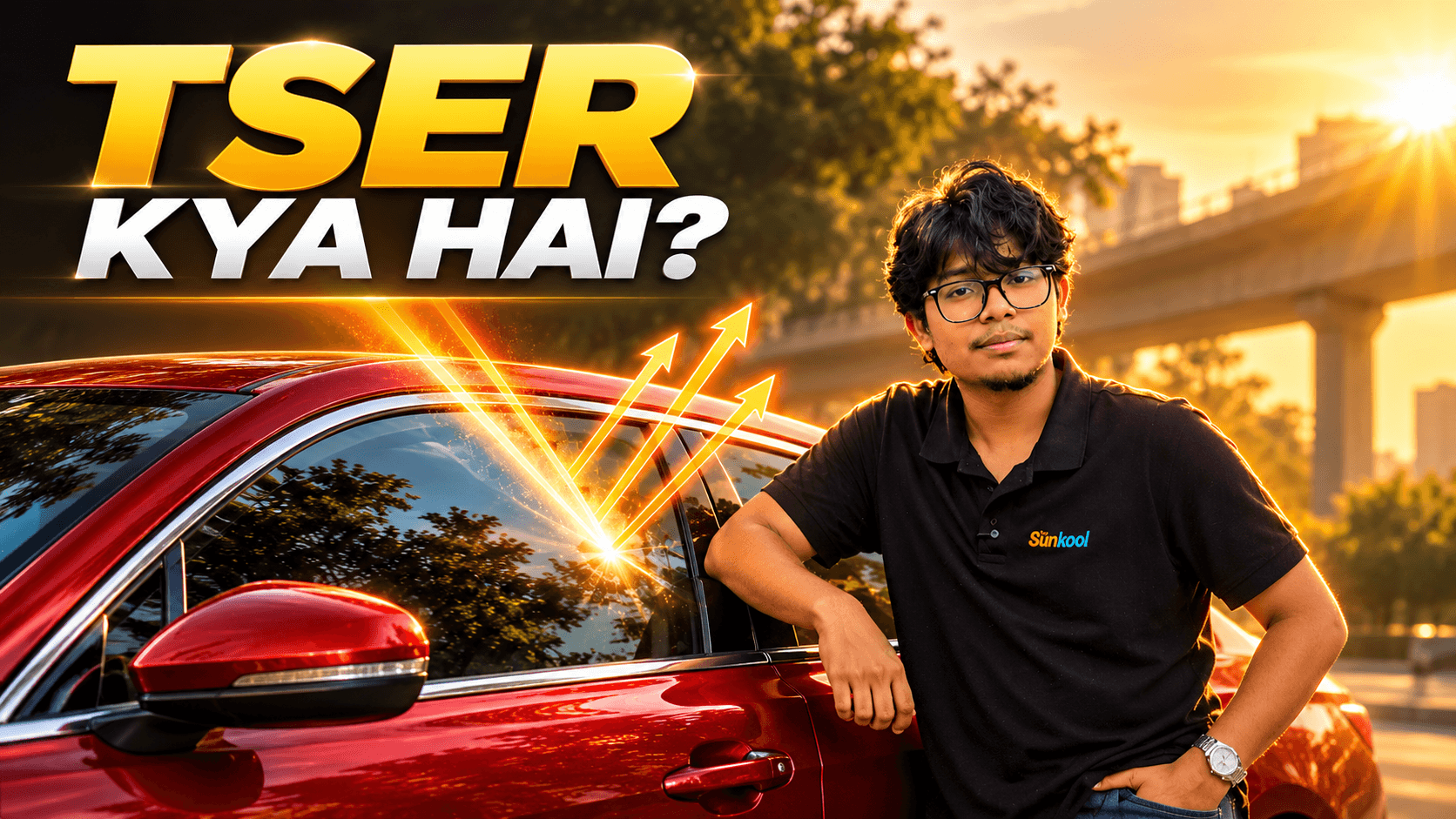
When choosing a car window film, one of the most useful specifications to understand is TSER (Total Solar Energy Rejection).
TSER tells you how much of the sun's total energy is rejected by the glass and film combination.
In simple words, a higher TSER generally indicates better overall solar heat rejection when products are tested under comparable conditions.
This is why checking only IRR is not enough. TSER helps you understand the film's overall heat control performance.
4. Why Are Heat Protection and Clear Visibility Both Important?
A good window film should do more than reduce heat.
It should also help maintain clear visibility so that drivers can comfortably see the road.
When selecting a film, consider both VLT for visibility and TSER for overall heat rejection.
Choosing the right balance helps make everyday journeys more comfortable without unnecessarily compromising visibility.
5. What Should You Check Before Installing Window Film?
Before choosing a car window film, check its important performance specifications.
VLT: How much visible light passes through.
IRR: How effectively infrared radiation is rejected.
UVR: How effectively harmful UV rays are blocked.
TSER: How much total solar energy is rejected.
Also, make sure you choose a genuine product, arrange professional installation and check the applicable vehicle-glazing regulations.
Conclusion
Choosing a car window film is not only about its shade. It's about understanding how well it protects against heat and UV rays while maintaining clear visibility.
By checking important specifications such as VLT, IRR, UVR and TSER, you can make a better decision for your car.
Sunkool – Premium Heat Control. Crystal Clear Visibility.
Explore Sunkool's range of premium car window films for a more comfortable driving experience.