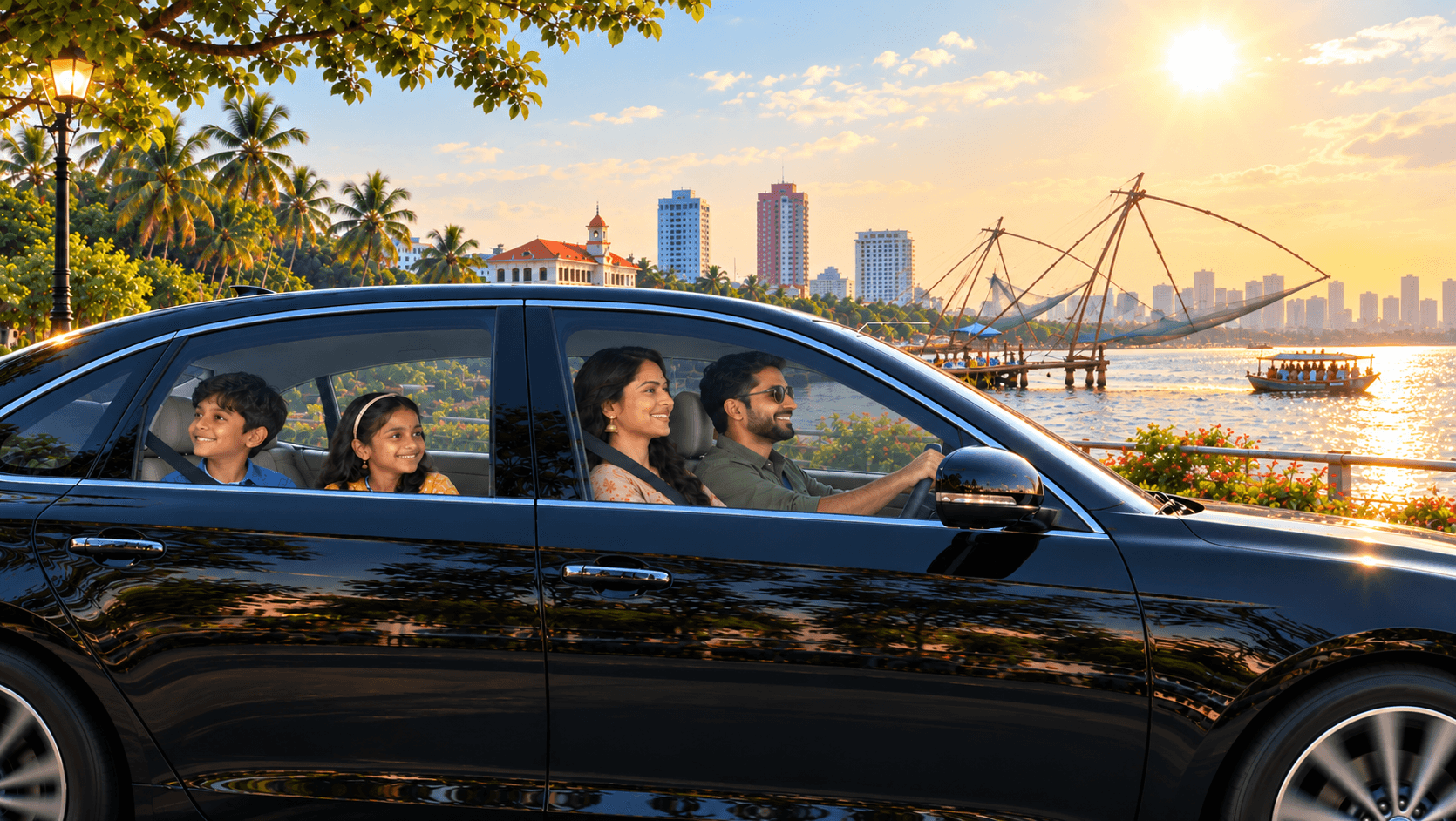
Car Window Film inErnakulam
Nano-Ceramic Window Film for Ernakulam's Heat, Humidity and Backwater Climate
Ernakulam doesn't do things halfway – the humidity clings, and the sun doesn't let up for hours at a stretch. Park anywhere near MG Road or get stuck in NH66 traffic, and your car turns into an oven fast. SUNKOOL's nano-ceramic film helps cut heat, glare and UV before they ever reach you.
Ernakulam Heat Protection
What Window Film Actually Improves
Kerala's climate keeps things warm and humid for most of the year, and car glass absorbs a lot of that heat over the course of a day. Window film addresses a fairly specific set of problems: a cabin that heats up quickly and stays sticky even after the AC kicks in, glare that gets sharper along open stretches and near the backwaters, UV exposure that builds up steadily on a daily commute, and dashboards, seats and upholstery wearing out faster under constant heat and moisture.
If you're looking into car window film, ceramic window film, nano ceramic film or car heat protection film in Ernakulam, here's what's actually worth knowing before you pick one.
None of this calls for the darkest film you can find. It calls for one that's actually matched to the problem.
Cooler Cabin, Faster
Most of the heat inside your car comes through the glass, not the body. SUNKOOL's nano-ceramic films are built to block infrared energy right at the window, so the cabin doesn't heat up as quickly, even after sitting parked near Marine Drive or in an open lot for a few hours.
Less Glare, Even Near the Water
Light bouncing off open roads and near the backwaters can be sharper than it looks, especially during early morning and late afternoon drives. A well-matched film cuts that glare down without compromising the visibility you actually need on the road.
Real UV Protection
SUNKOOL's films carry UV rejection ratings up to 99-100% depending on the grade. For anyone driving daily in Ernakulam's near-constant sun and humidity, that adds up to a meaningful reduction in cumulative UV exposure.
Interior That Holds Up Longer
Heat and humidity together are rougher on car interiors than dry heat alone — dashboards crack, upholstery fades, and trim dulls faster. A film that blocks UV and cuts the heat load slows all of that down considerably.
Built for Ernakulam Roads & Weather
Ernakulam Heat?Control It With 
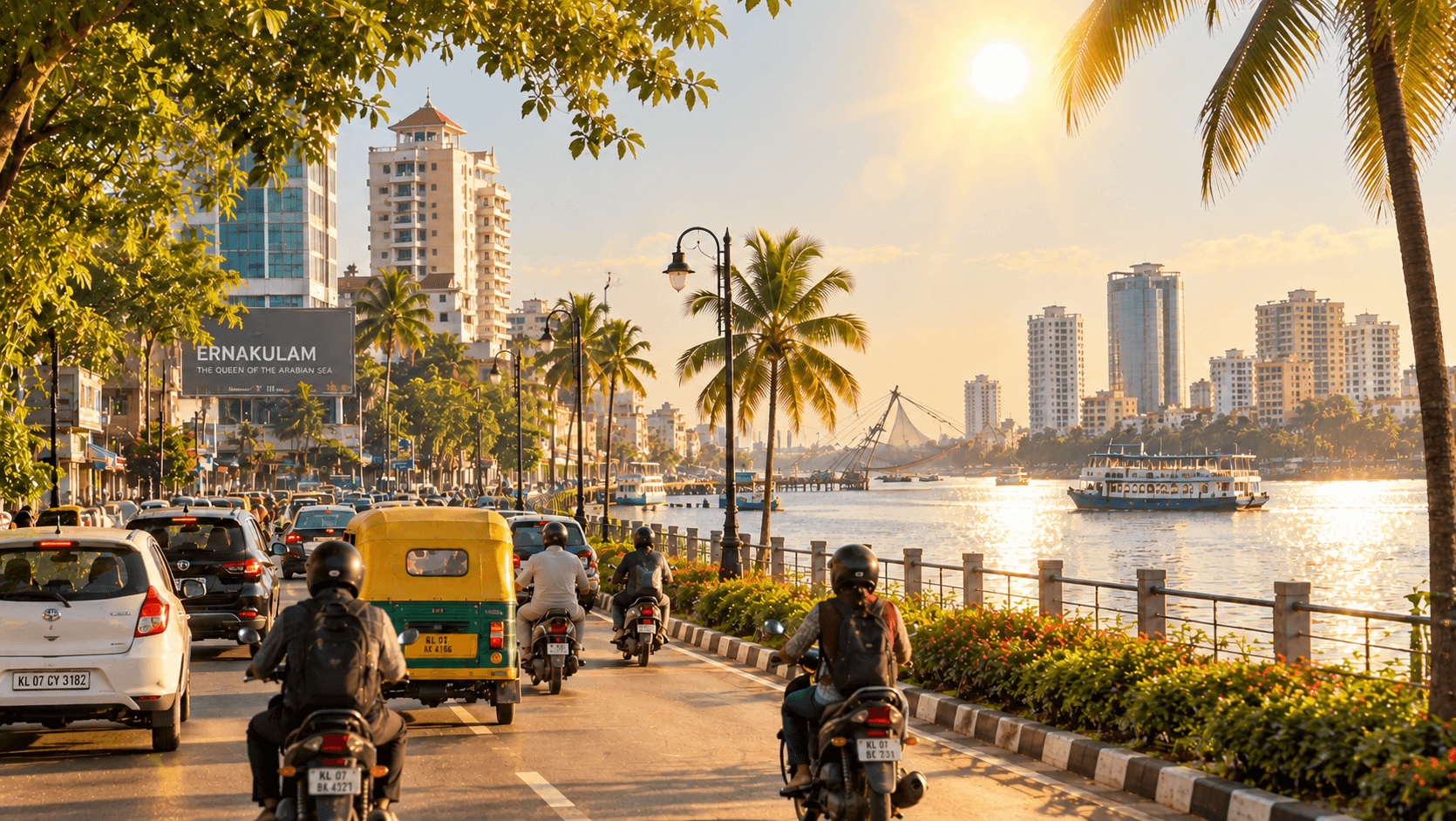
If your regular driving takes you through MG Road, Marine Drive, Kakkanad, Edappally, Vyttila, or along NH66, you know the drill — your car spends half its life either baking in open sun or inching through traffic. Throw in the odd trip toward the backwaters or Fort Kochi, and even a short weekly commute adds up to a lot of heat exposure.
Ernakulam's warm, humid climate and open-sun parking
Long drives along NH66 and toward Fort Kochi
Traffic through MG Road, Marine Drive and Vyttila
Daily commutes across Kakkanad, Edappally and near the backwaters
Less heat when you get back in. Less glare during peak sun hours. A drive that does not wear you down before you reach your destination.
Heat Reduction. Glare Reduction. Comfort.
See The Difference
Reduced Glare. Cooler Cabin.
Drag the slider to see how SUNKOOL nano-ceramic film changes the light coming through the glass.
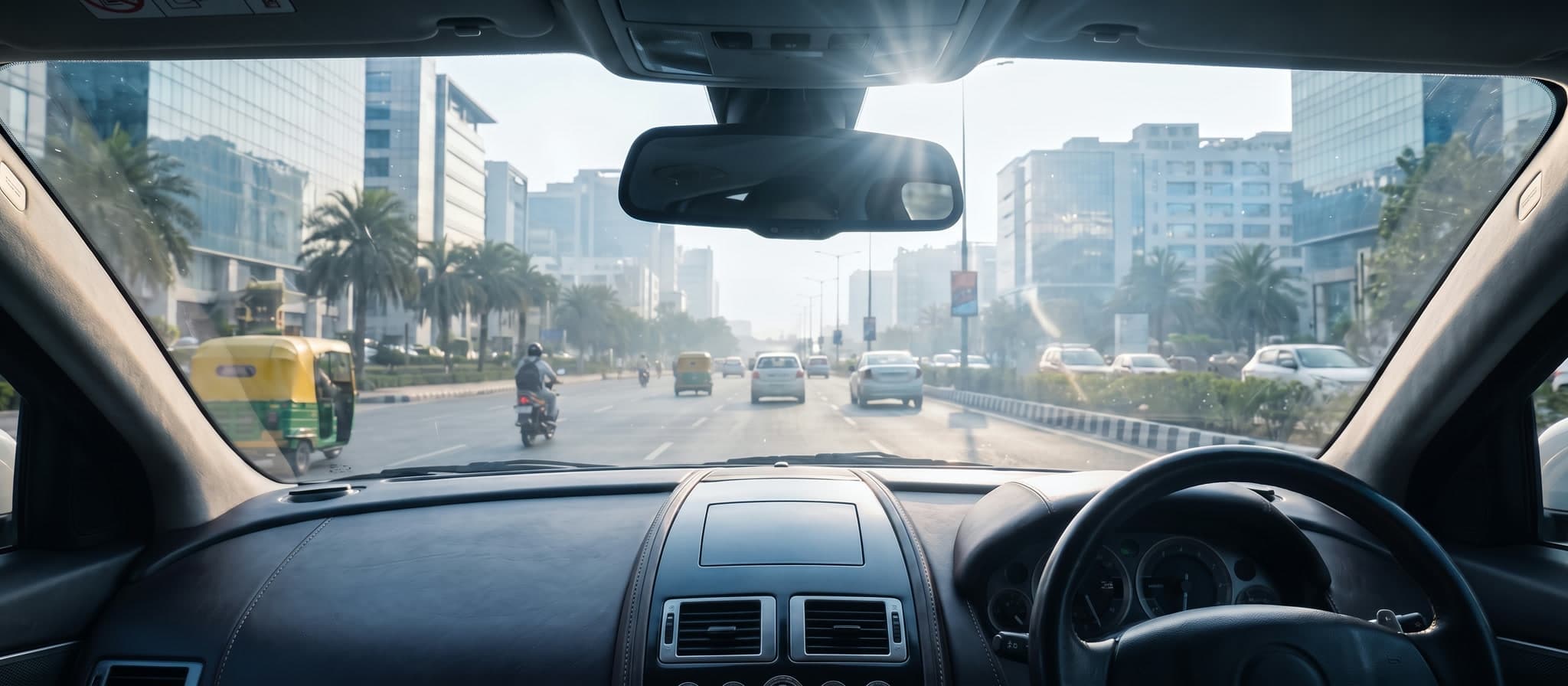
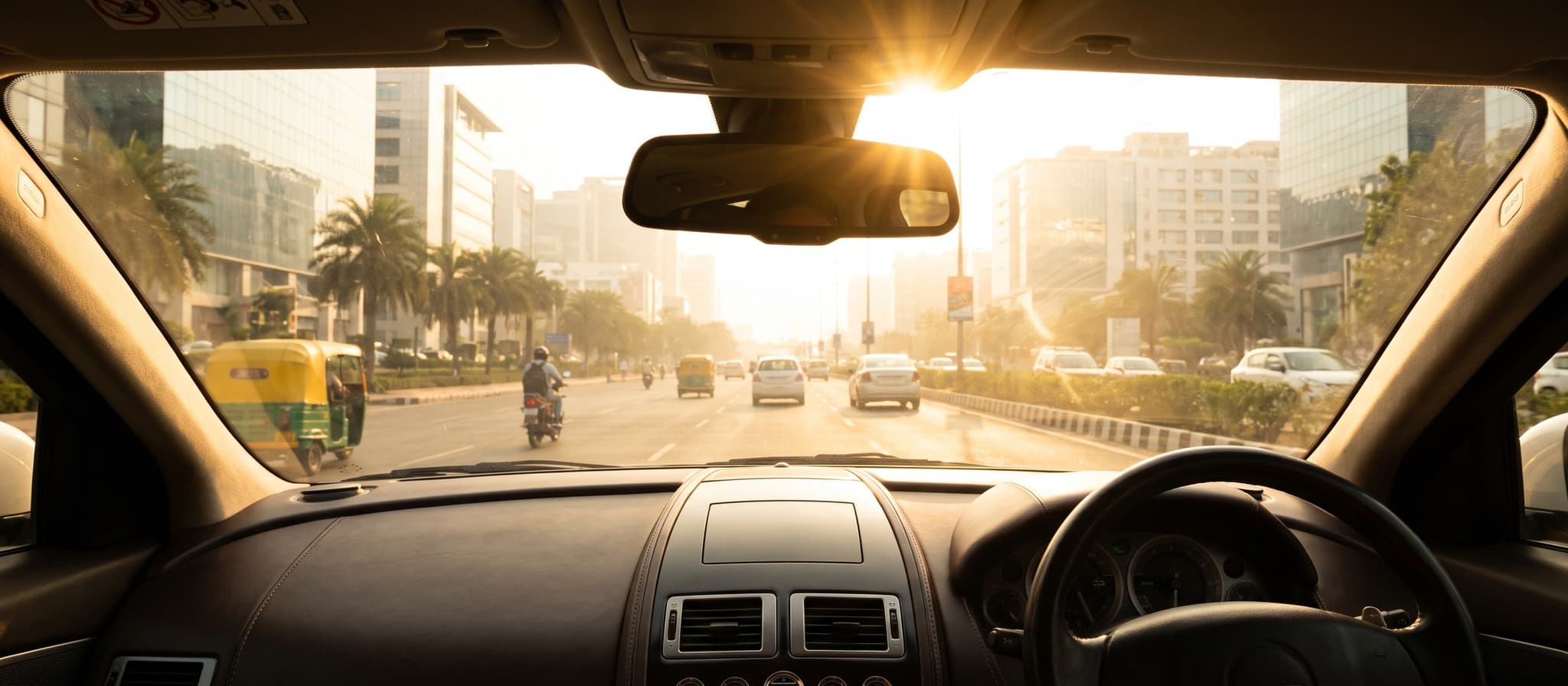
Harsh glare
More heat
Clearer view
Cooler cabin
Drag the handle to compare
Why SUNKOOL for Car Window Film in Ernakulam?
Dark Is Not the Same as
Effective.
Why SUNKOOL's films are built the way they are: darkness alone does not decide performance. Total heat rejection, infrared blocking, UV protection, light transmission, clarity, signal safety, durability and installation all matter.
VLT measures how much visible light passes through, not how much heat is blocked. Nano-ceramic technology rejects infrared energy, so a lighter ceramic film can outperform a darker film that lacks it. Good film offers infrared heat rejection, UV blocking, reduced glare, a cooler cabin, clear visibility and longer-lasting interior materials.
Nano-Ceramic Technology at the Core
Ceramic particles are designed to block infrared heat directly, a different approach from simply tinting glass darker.
Solid UV Protection in Every Grade
SUNKOOL films are built to reject UV effectively. Choosing a lighter shade does not mean giving up protection.
Clarity Without Losing Performance
Higher-VLT films deliver solar protection while keeping the glass close to its factory-clear look.
No Signal Interference
The non-metallic construction lets GPS, mobile network signals and FASTag keep working normally.
A Grade Built for Your Priority
Choose based on heat rejection, visibility, optical clarity, signal safety, durability and installation quality.
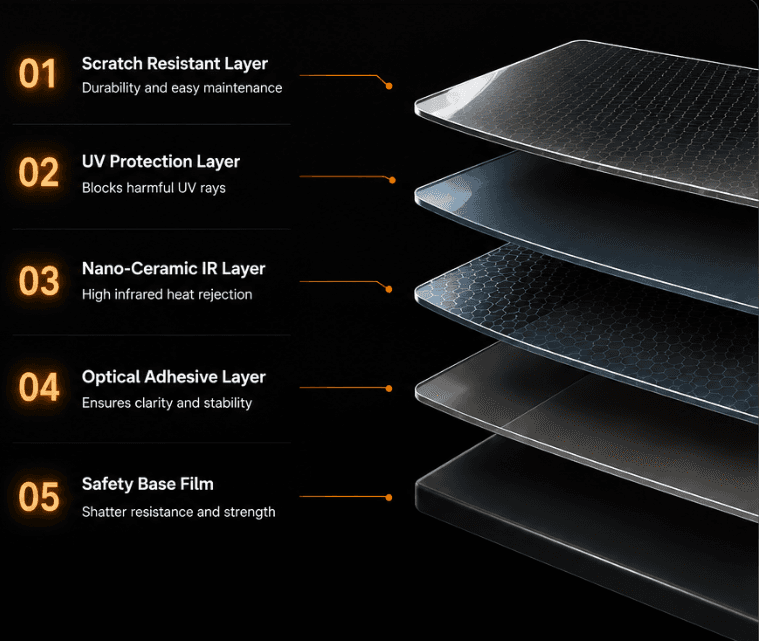
Advanced
Nano-Ceramic
Upto 95%*
Heat Rejection
Upto 99%*
UV Protection
Crystal Clear
Visibility
Signal-safe
Technology
Long Lasting
Durability
*SUNKOOL states that these values are based on routinely accumulated quality-control data and may vary between batches.
Explore SUNKOOL Window Films →Choosing Film for Ernakulam's Climate
The Numbers That Actually Matter for Heat
Ernakulam's mix of heat and humidity makes the instinct to go as dark as possible understandable, but the smarter approach weighs heat rejection, IR rejection, UV protection, visibility and VLT together. Some drivers will lean toward a higher-VLT film for visibility; others will want maximum solar rejection with a darker grade. Both are reasonable, depending on your vehicle and the current local rules.
Up to %
IR Rejection
–%
UV Protection
%
Signal Safe
Cooler Cabin
Lower interior temperature during Ernakulam's warm, humid afternoons and long parking hours.
Clear Visibility
Reduced glare on open roads and near the backwaters for more comfortable day and night driving.
Better Protection
Helps protect you and your car's interiors from Ernakulam's year-round UV exposure, heat and humidity.
TSER
Total Solar Energy Rejected — the proportion of solar energy rejected by the glazing system.
IR Rejection
How effectively the film helps block infrared energy.
VLT
Visible Light Transmission — how much visible light passes through the glass.
UV Rejection
The film's ability to reduce ultraviolet transmission.
Window Tint Rules in Ernakulam
Before booking an installation, review SUNKOOL's guidance on CMVR Rule 100 and IS 2553 (Part 2): 2019 (Revision 1). Your window's final VLT combines the original factory glass and the applied film. A film rated at 70% VLT does not mean the finished window will read 70%.
There is also a Kerala-specific angle worth knowing. Kerala has seen notable legal discussion around window film and tinting, including scrutiny from the Kerala High Court on how aftermarket film should be treated relative to factory-tinted glass. Rules and their enforcement can shift, so confirm the current position before installing anything.
Regulatory requirements and enforcement can change. Confirm the current applicable rules and your car's final VLT before installation.
Check Window Film Regulations →Products
Choose the Right Window Film for Your Car in Ernakulam
HD 70 offers solar protection with a lighter, high-clarity finish. Choose based on your vehicle's existing glass, final VLT, driving conditions and heat rejection priorities.
HD 70
Explore MoreA lighter, high-clarity grade for Ernakulam drivers who want strong heat rejection without a heavily tinted look, even in the humid, sun-heavy stretches of the year.
Visible Light Transmission (VLT)
%
Total Solar Energy Rejected (TSER)
%
High Heat Rejection
High UV Protection
Infrared Rejection (IR)
%
UV Rejection
%
No Signal Interference
Enhanced Clarity
SUNKOOL states that these values are based on routinely accumulated quality-control data and may vary between batches.
Professional Installation Process
Professional Car Window
Film Installation in Ernakulam
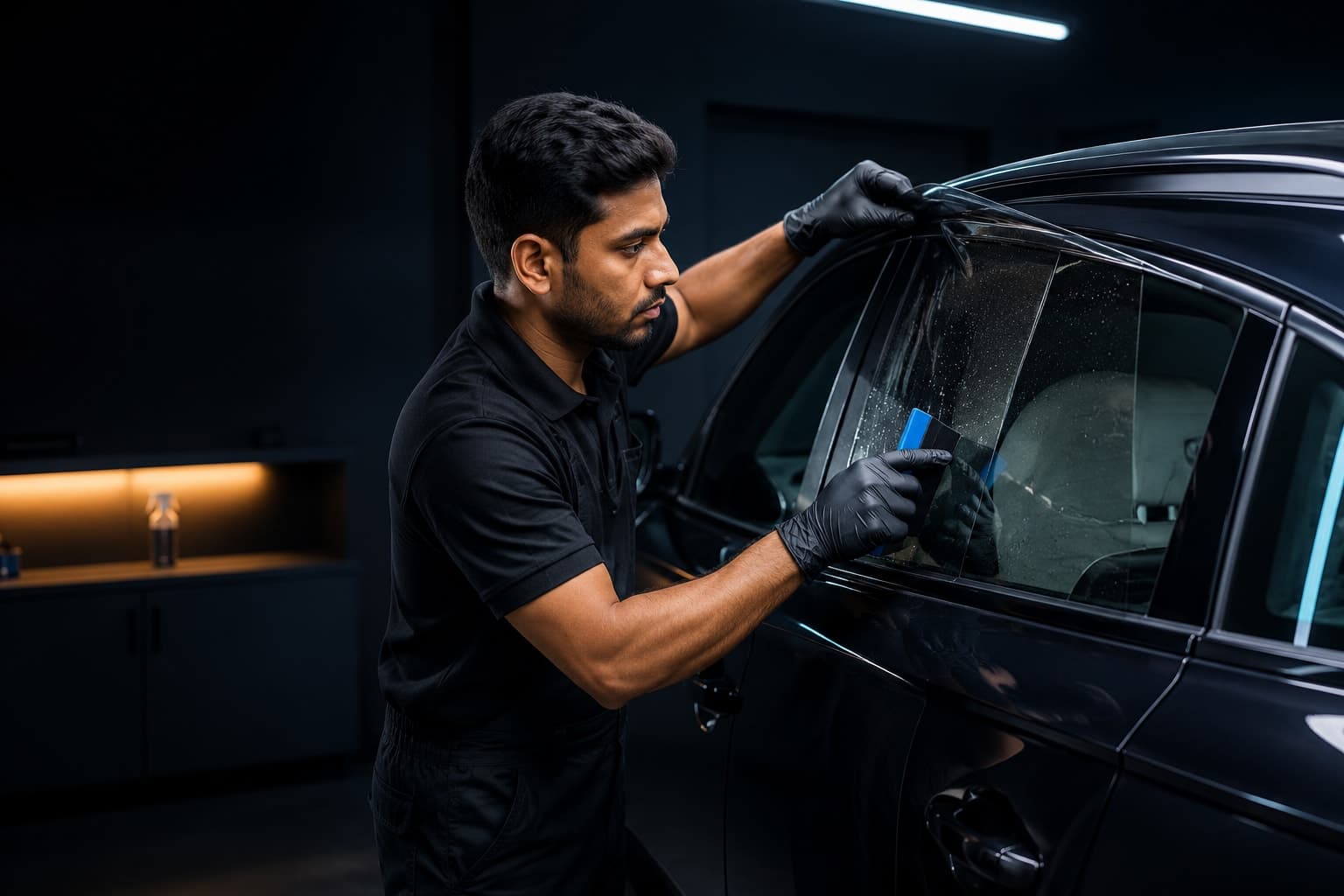
A good film installed badly still bubbles, peels at the edges, or traps dust underneath. Given Ernakulam's humidity, clean adhesion matters even more here than in drier climates, since trapped moisture under a rushed application tends to show up as haze later.
Vehicle Evaluation
Your car's make and glass type are checked before a film is selected.
Film Selection
The right grade is recommended based on your visibility and heat rejection priorities.
Glass Preparation
Every window is thoroughly cleaned so the film has a proper surface to bond to.
Precision Application
The film is measured, cut and applied to each window individually.
Finishing and Inspection
Every edge and surface is checked for bubbles or imperfections before the car is handed back.
Warranty and Product Verification
Warranty documentation is completed and the product verified against SUNKOOL's terms.
SUNKOOL Window Film in Ernakulam
Talk to About Installation
Looking for car window film near you in Ernakulam? You can contact the SUNKOOL team for film selection, installation queries and vehicle-specific recommendations.
Ernakulam Installation Enquiries
Ernakulam, Kerala
Contact SUNKOOL directly to find out what installation options are available in Ernakulam.
Car Window Film Installation
Phone: +91 7028146972 · Email: info@sunkool.in
Get Started
Get Car Window
Film in Ernakulam
SUNKOOL's nano-ceramic films give Ernakulam drivers a practical way to cut cabin heat, glare and UV exposure without giving up on visibility or signal performance. It comes down to five factors: heat rejection, IR rejection, UV protection, VLT and optical clarity. Share your car model and typical driving conditions, and the SUNKOOL team can point you toward a grade that fits.
Protection at a Glance
Up to %
IR Heat Rejection
–%
UV Protection
%
Signal Safe
Cooler cabin. Clearer drive.
Frequently Asked Questions
It comes down to what matters more to you — visibility or solar rejection. Higher-VLT films stay lighter; lower-VLT grades push heat rejection further, within whatever limits apply to your vehicle.
Yes. Ceramic film is built to block infrared and solar energy at the glass itself, rather than just darkening the window.
Yes. Given how consistently warm and humid Ernakulam stays through the year, most drivers notice a real difference day to day, especially with cars parked outdoors or driven during peak sun hours.
SUNKOOL states its films block up to 99-100% of UV rays, depending on the grade.
No. The film has no metallic layer, so GPS, mobile signal, and FASTag all continue working normally.
That depends on your car's original glass and the final combined VLT once the film's applied, not just the film's own rating. Always check what the final reading comes out to.
You'll need to stay within the applicable VLT requirements for your vehicle's glass under current regulations, and it's worth confirming the current rules given Kerala's specific legal history around this. Always check before installing.
Not necessarily. Heat rejection comes down to the film's composition, particularly whether it uses ceramic technology, not just how dark it looks.
Humidity itself doesn't damage a properly installed nano-ceramic film, but a rushed installation is more likely to show issues like bubbling in a humid climate. This is a case where installation quality really does make the difference.
Contact SUNKOOL directly to find out what's available in Ernakulam.
A Cooler, Clearer Drive Around Ernakulam
Ernakulam's heat and humidity aren't going anywhere, but how much of it actually reaches you inside the car is something you can control. The right film cuts down solar heat, glare and UV exposure without needing maximum darkness to do it. Base the decision on heat rejection, UV protection, visibility, VLT and installation quality.