If you have ever thought about getting window film for your car, chances are someone has told you it is illegal. A cousin, a friend, maybe even a traffic cop at a random checkpoint. And honestly, for years, that was mostly true. But the law has changed, and most people driving around India right now do not know it.
Let us clear this up properly.
The court banned black films and any material that made car windows too dark, mainly because dark windows were being misused to hide criminal activity and made it harder for police to see inside a vehicle during checks. This ruling became the reason every traffic cop, every mechanic, and every uncle in your building tells you window film is banned in India, full stop.
Then in 2024, something shifted.
A category called Safety Glazing is legally permitted. This is different from the old idea of a black tint film stuck onto glass.
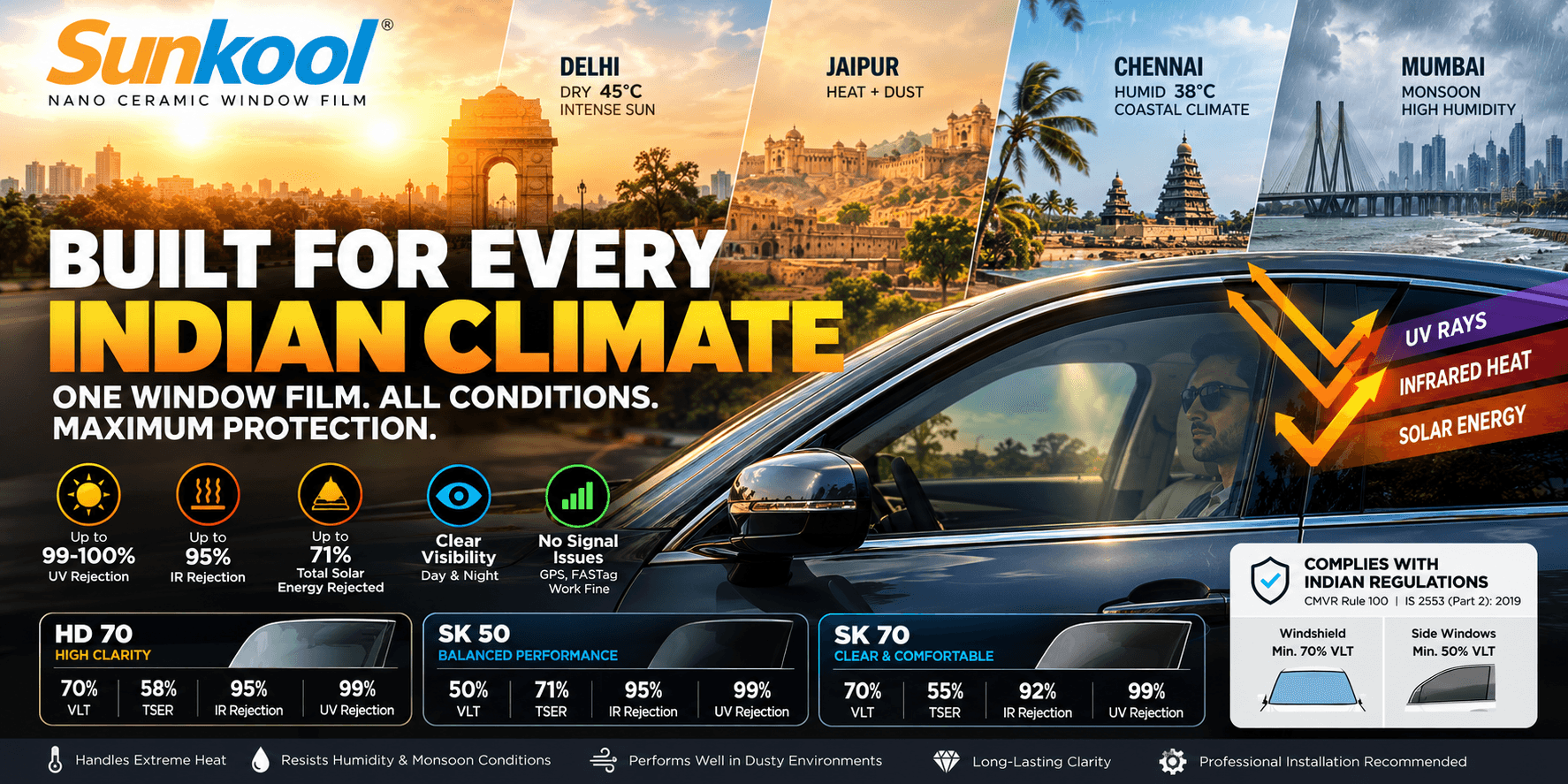
Safety Glazing is basically a plastic layer that meets a specific Indian Standard, IS 2553 Part 2, first revision, 2019. It still has to let through at least 70 percent visible light on the windscreen and rear window, and 50 percent on the side windows.
Here's what that means in simple terms. If your film meets this standard and keeps your windows within that visibility limit, the court said there's no legal ground to fine you for it. Doesn't matter if the car manufacturer fitted it or you got it added later.
The court made another good point too. There's really no way for a traffic officer to look at your windows and tell if the film came from the factory or was installed afterward. So punishing owner-installed film while allowing the same thing from a manufacturer never made much sense to begin with, and the court threw that distinction out.
Why this distinction actually matters for comfort, not just legality
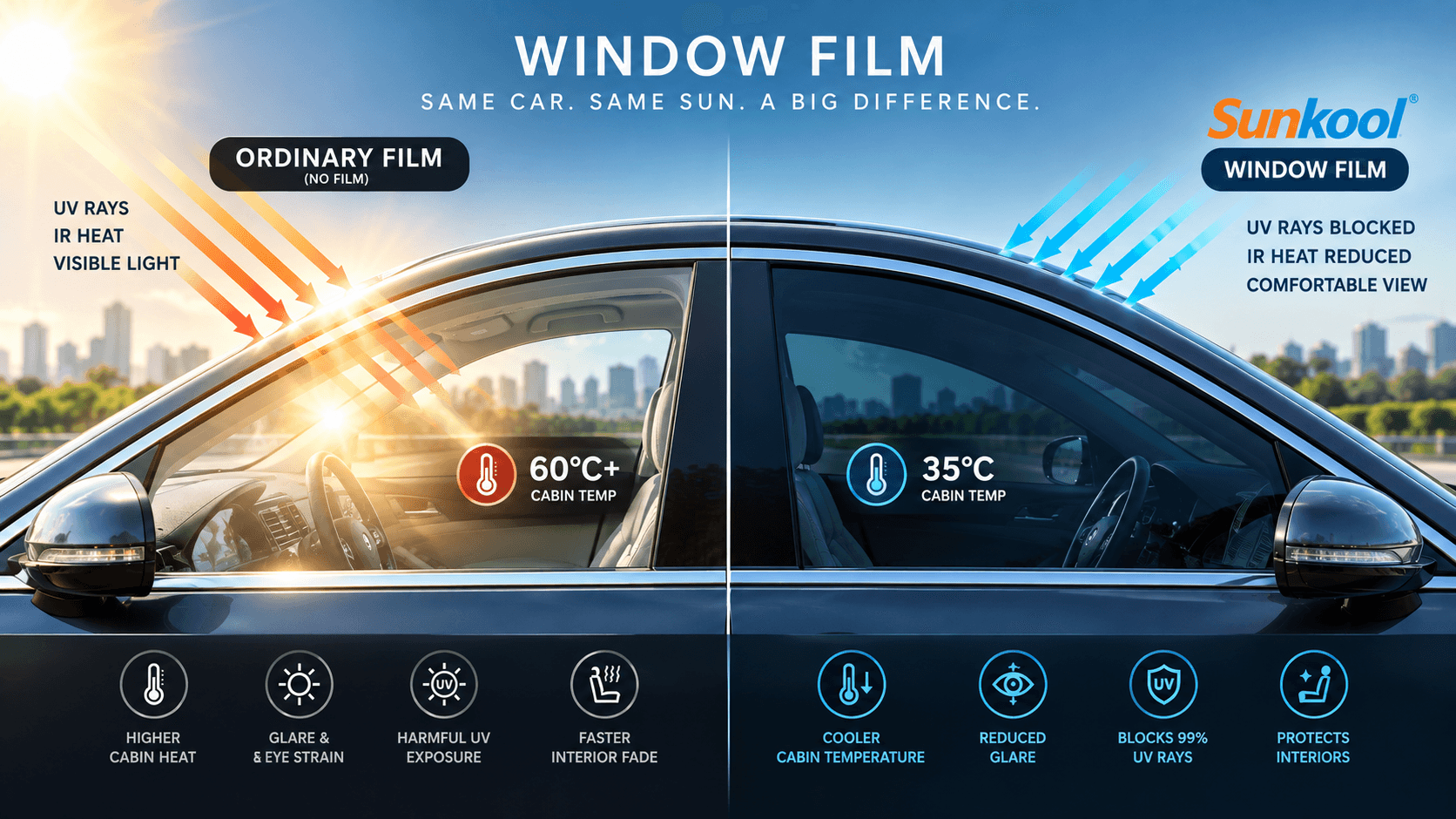
A lot of people assume the only reason to darken your windows is privacy or looks. But in Indian summers, the real reason most people want film on their car is heat. Cabin temperatures in a parked car can cross 51 degrees Celsius on a hot afternoon, and UV exposure through glass adds up over years of daily driving.
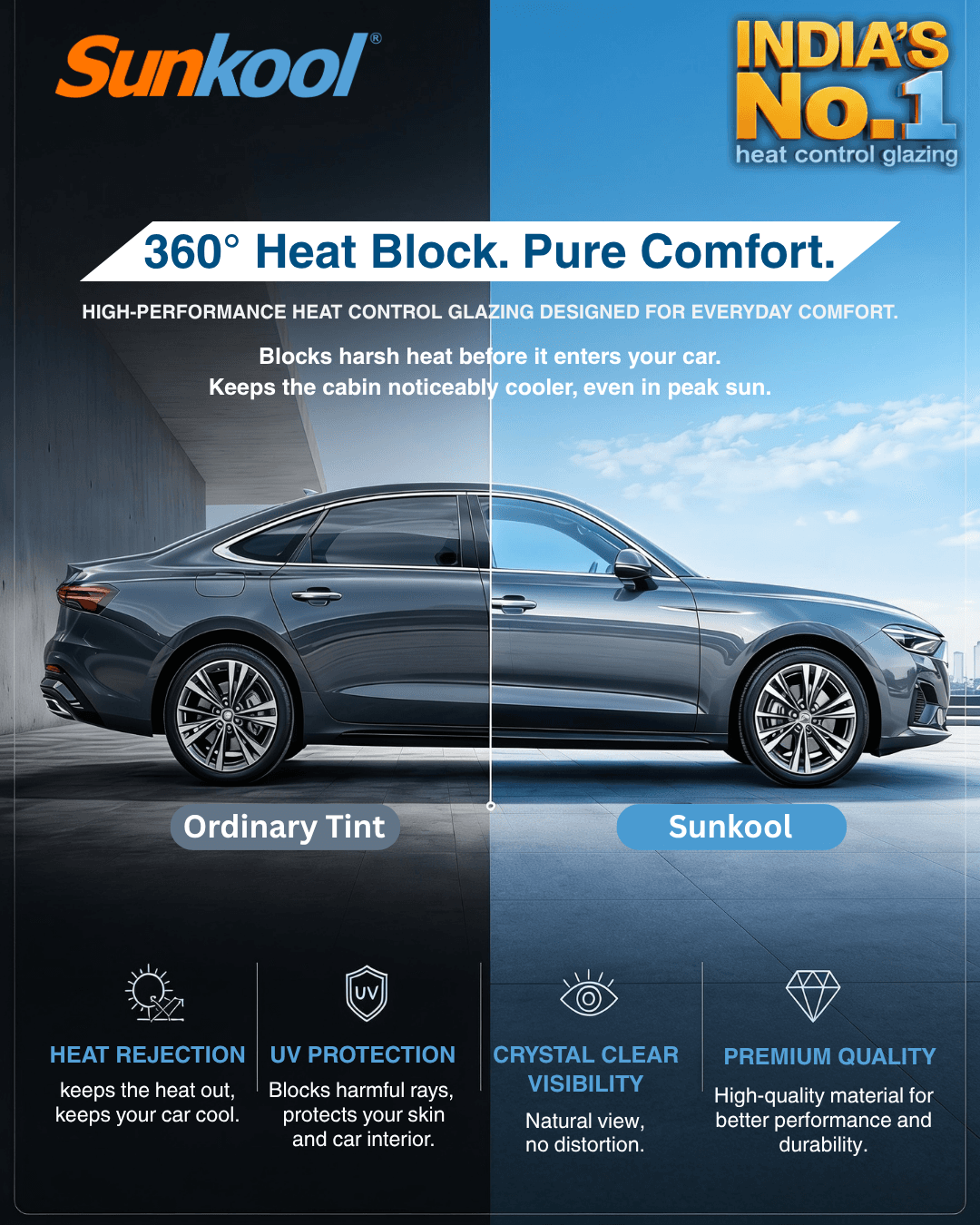
This is exactly why certified safety glazing films matter. A good ceramic based film can block the majority of UV rays and a large share of infrared heat without making the glass dark enough to break VLT limits. You get the heat rejection and UV protection you actually wanted.
This is different from the old dyed or metallized tints most people picture when they hear the word tint. Those work by blocking light generally, which means darkening the glass. A properly engineered ceramic film works by filtering out specific wavelengths, mainly UV and infrared, while letting visible light pass through closer to its natural level.
What to actually check before you get film installed
Ask for the film's VLT rating in writing, not just a verbal promise from the installer.
Make sure the windscreen and rear window stay at or above 70 percent VLT, and side windows stay at or above 50 percent.
Get an installation or compliance certificate from whoever installs it, and keep a copy in your glovebox.
Window film in India is not a simple yes or no anymore. The old blanket ban from 2012 still technically applies nationwide on paper, but a 2024 court ruling has drawn a clear and reasonable line between illegal dark tint and certified safety glazing that protects visibility while still protecting you from heat and UV. Until the Supreme Court weighs in directly on the updated standard, your safest move is choosing film that is properly certified, staying within the VLT limits, and keeping your documentation on hand.
That is exactly the category Sunkool's window film is built for. It is engineered as safety glazing first, heat and UV protection second, so you are not choosing between staying comfortable and staying on the right side of the law.