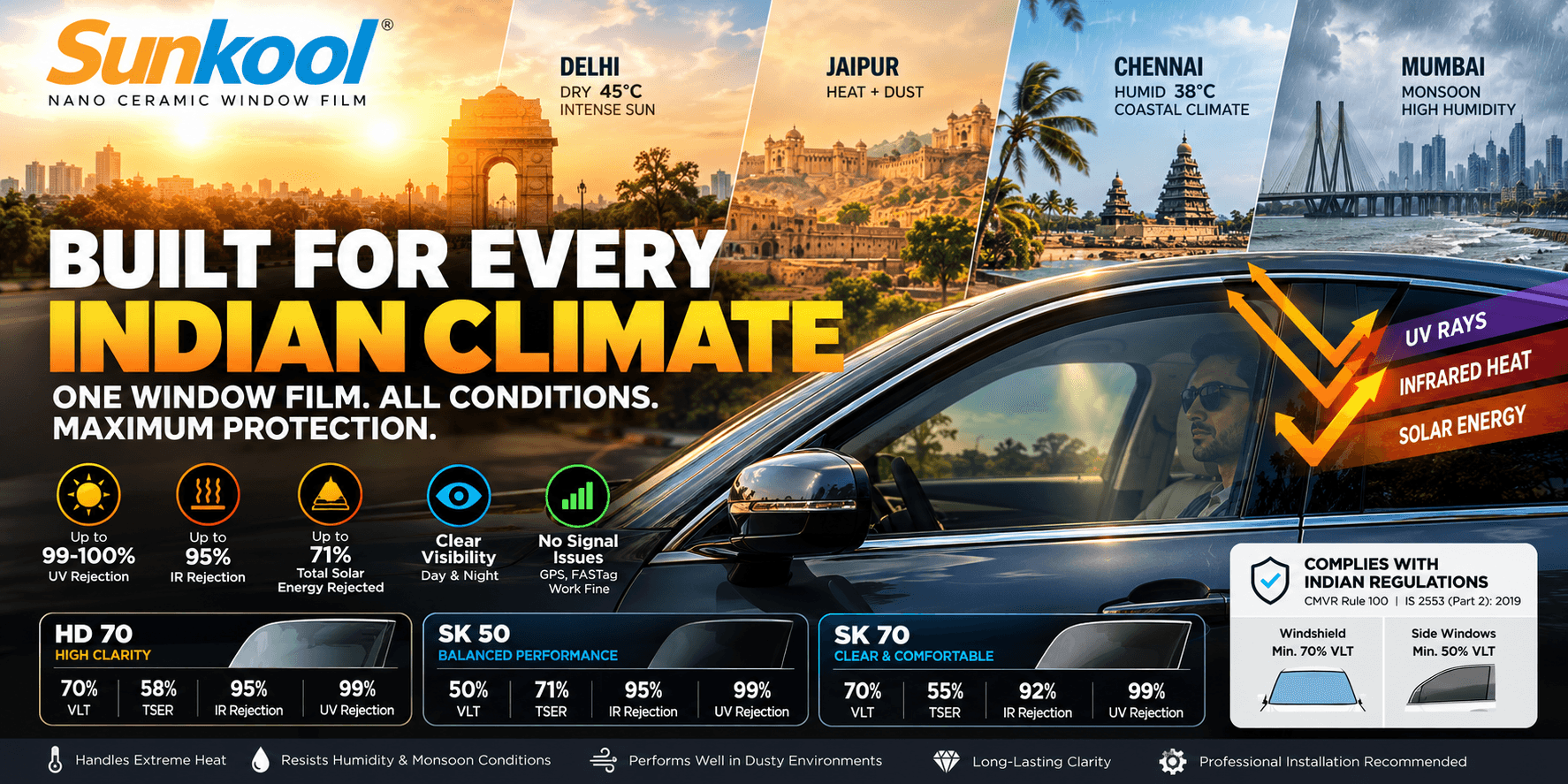
Delhi's dry 45°C summer and Chennai's humid 38°C aren't the same problem, even though both feel brutal in a parked car. A film that performs beautifully in Jaipur's dust and heat might haze up during Mumbai's monsoon if it wasn't built with humidity resistance in mind.
So "best for Indian climate" really means best across a few different, sometimes conflicting demands at once: intense, sustained UV exposure nearly year-round, dry heat in the plains, humidity in the coastal and monsoon-heavy regions, and glass regulations that cap how dark you're legally allowed to go. A film that only solves one of these isn't actually the best film for India. It's just the best film for part of India.
Most of the marketing around window film focuses on the wrong number. Everyone talks about how dark a film looks. That's almost irrelevant to how well it actually performs.
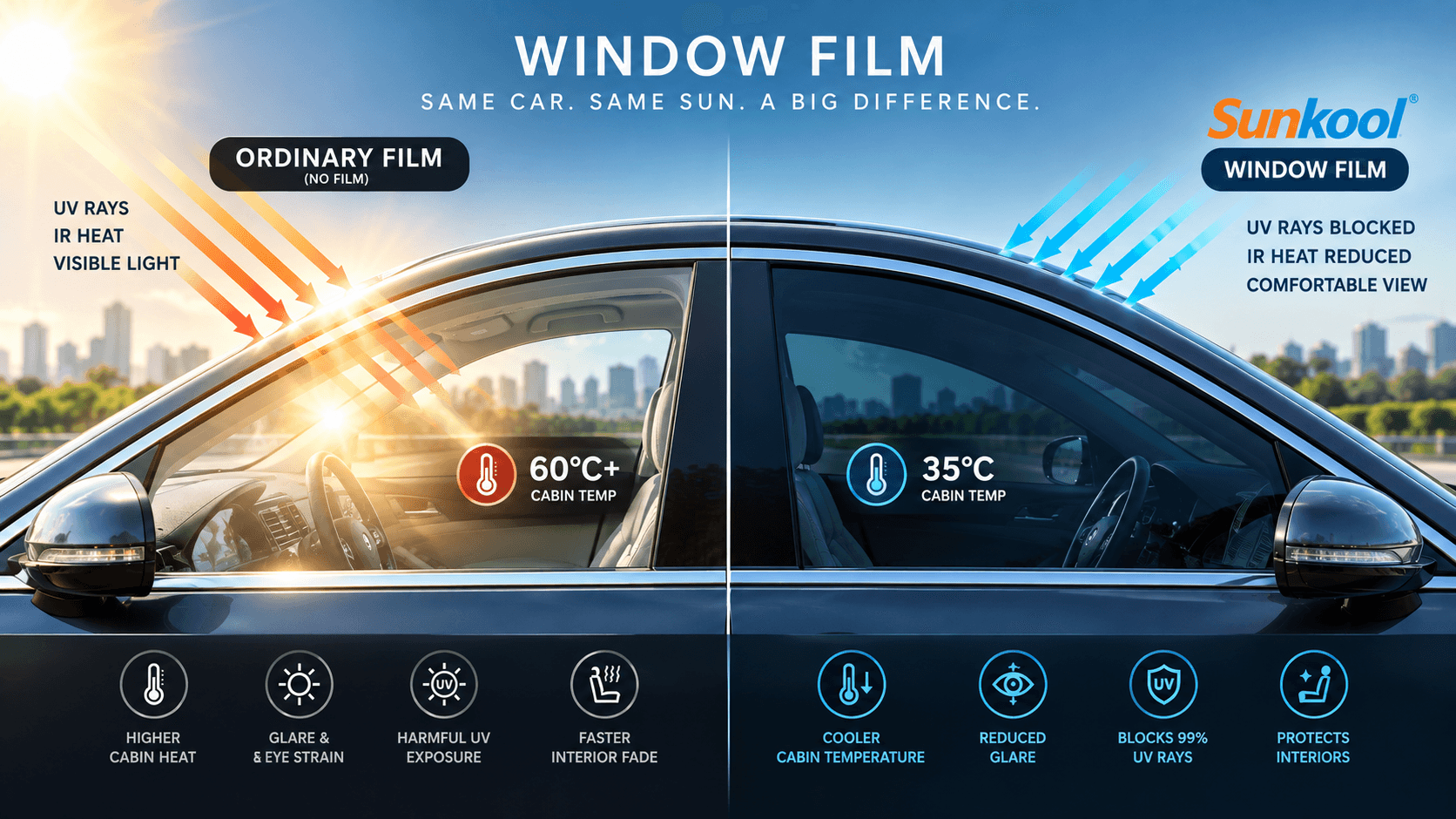
Infrared rejection is the percentage of heat-carrying radiation the film blocks before it ever reaches your cabin. A film can be nearly clear and still reject serious heat if it's built with the right technology.
This is where ceramic, specifically nano-ceramic, film pulled ahead of older technologies. Dyed films darken glass by absorbing visible light, which does cut some heat as a side effect, but it's not targeting infrared specifically. Metalized films reflect heat well but can mess with GPS and FASTag, a real problem now that nearly every car in India depends on both. Ceramic film uses embedded ceramic particles that go after infrared directly, which is why it's become the default recommendation for genuinely hot, sun-heavy climates, India very much included.
Where SUNKOOL Fits
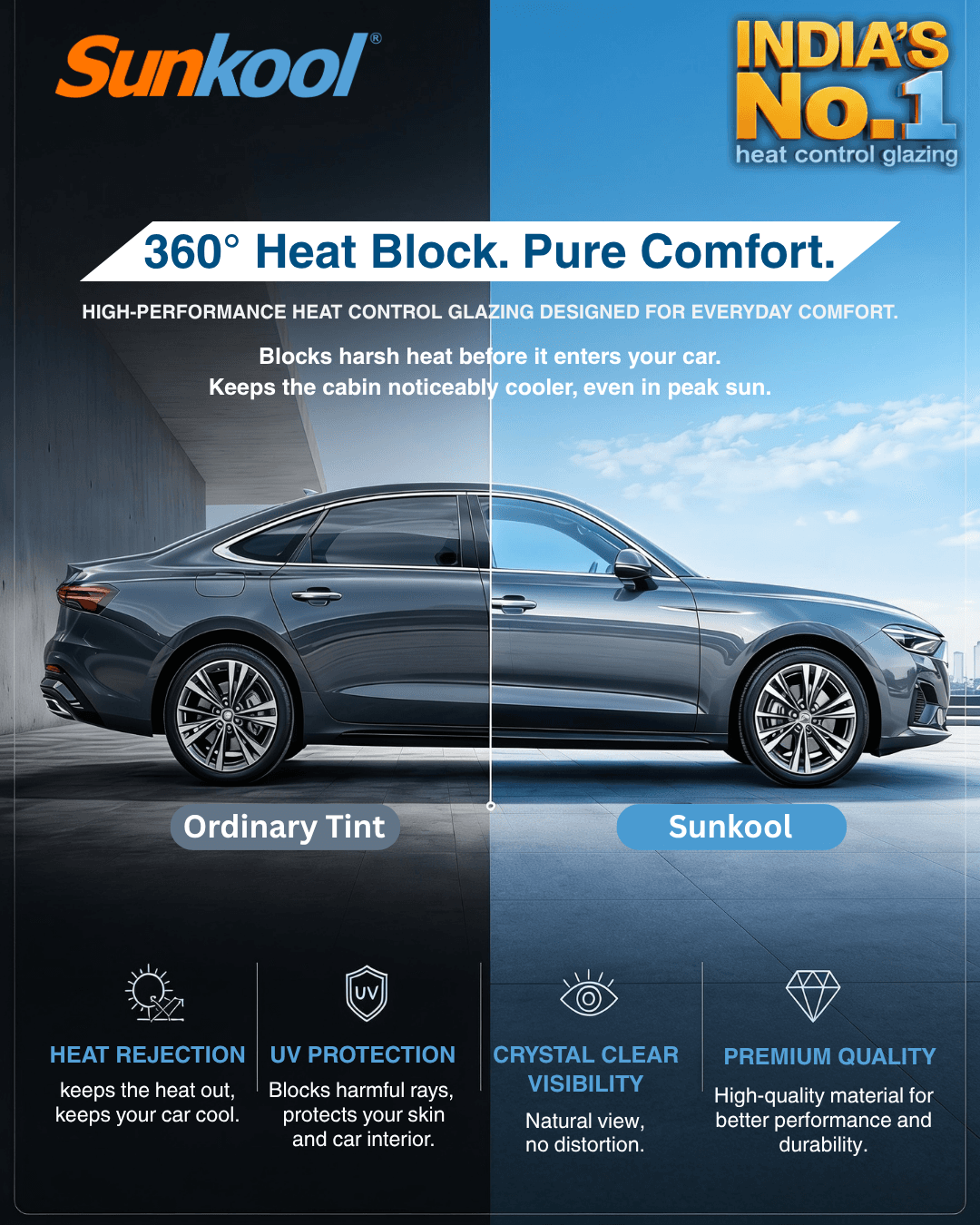
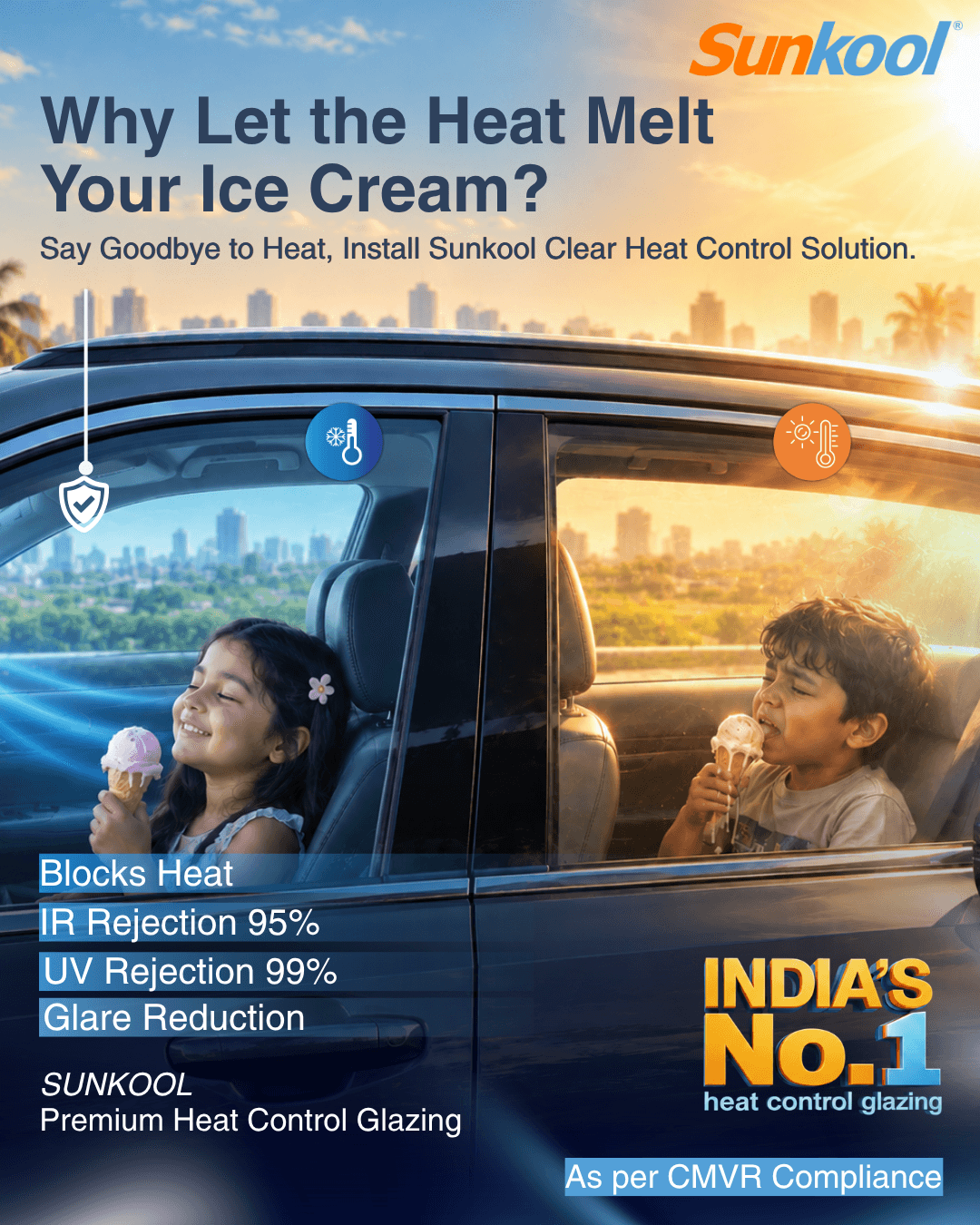
SUNKOOL builds its window film range specifically around nano-ceramic technology, and the reason it keeps coming up in these conversations is that its product lineup is built around exactly the problems Indian drivers actually deal with.
The range runs across grades, HD 70, SK 70 moving from a lighter, high-visibility film , maximum heat-rejection option. What's worth noticing here is that UV rejection sits at 99-100% across every single grade in the lineup. That's not something every brand offers consistently, a lot of window film ranges only hit top UV numbers on their most expensive, darkest grades.
On the heat side, the numbers scale sensibly as you move through the range. HD 70 sits at 58% TSER with 95% infrared rejection, SK 50 climbs to 71% TSER with the same 95% infrared rejection, and What that actually tells you is the infrared-blocking technology stays strong across the whole range, and what shifts is really the overall solar energy rejection and how dark you end up going, letting you pick based on your actual priorities rather than being pushed toward one default option.
The films are also non-metallic, which matters a lot given how dependent modern Indian cars have become on GPS navigation and FASTag for toll payments. A film that quietly interferes with either of those isn't actually solving a problem, it's creating a new one.
Does It Actually Handle India's Legal Requirements
This part matters more than most people realize before they've had a window film experience go wrong. India's rules under CMVR Rule 100 and IS 2553 (Part 2): 2019 require a minimum VLT of around 70% on windshields and 50% on side windows. SUNKOOL's range directly accounts for this, with HD 70 and SK 70 both sitting right at the legal visibility threshold for drivers who want solar protection without pushing toward non-compliance, while .
This is where installation quality becomes almost as important as the film itself, and it's worth being honest that this applies to any brand, not something unique to SUNKOOL. In cities like Chennai, Mumbai, or Surat, trapped moisture during a rushed installation is what typically causes bubbling or haze months later, not a flaw in the film's own construction. A properly cleaned surface and a careful application process matters more in these climates than in Rajasthan's dry heat, where that specific failure mode is far less common.
If you're in a humid city, ask specifically how your installer handles glass preparation and moisture, not just which film grade they're recommending.
SUNKOOL's nano-ceramic range is built on the right technology for Indian conditions, consistent UV protection across every grade, infrared rejection that scales sensibly, non-metallic construction that won't fight with your car's GPS or FASTag, and grade options that let you balance visibility against heat rejection rather than forcing one choice on you.
Whether it's specifically the right pick for your car comes down to a few things only you can answer: how hot and how humid your specific city runs, how dark you're legally allowed and personally want to go, and whether there's a SUNKOOL-certified installer who can actually do the application properly near you. A great film badly installed still bubbles and peels, regardless of the brand on the box.
VLT, TSER, infrared rejection, and UV rejection, for whichever specific grade you're considering, and have your installer confirm your car's real, final combined VLT before you commit. That's true whether you go with SUNKOOL or anyone else.